Move through the internet without being owned by it.
Roamer helps people control their digital identity across the internet.
Prove what matters.
Reveal less.
Carry trust between digital spaces.
Stay in control of who you are online.
Not another platform account.
Not another surveillance identity system.
Not another monetized profile.
Roamer is an open-source personal sovereignty layer for identity, privacy, proof, reputation, and digital presence.
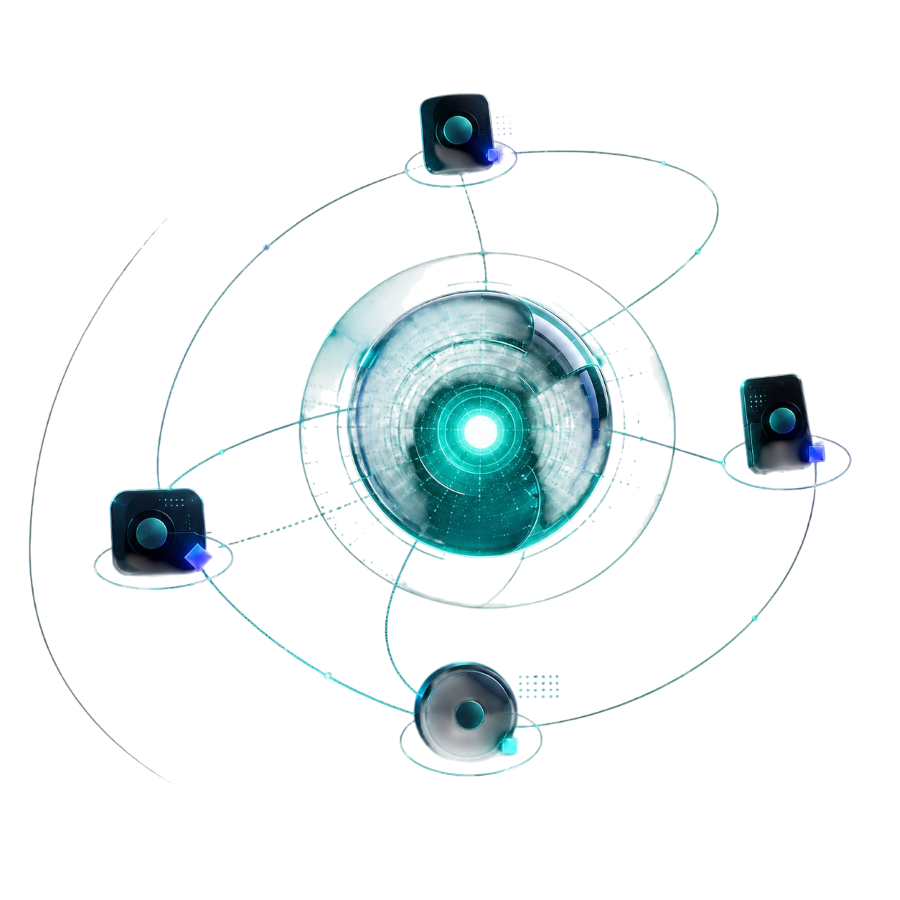
It begins at the boundary between the individual and the web.
Traceveil
Reduce what your browser reveals.
Traceveil reduces browser fingerprint linkability, normalizes unusually identifying browser signals, and limits common tracking paths before they become part of your persistent digital identity.
Stable · Chrome · Open Source
Lens Guard
Know what may be watching around you.
Lens Guard explores privacy-preserving detection of nearby camera-capable smart glasses and wearables — without connecting to them, tracking their owners, or sending nearby-device data to the cloud.
Public Research Alpha · Android · Open Source
The future we want
The internet should not require people to surrender themselves in order to participate.
A person should be able to move across websites, communities, marketplaces, applications, AI systems, and digital worlds with agency.
- They should be able to prove what matters without revealing everything.
- They should be able to use different identities in different contexts.
- They should be able to build reputation that is portable, not trapped.
- They should be able to remain pseudonymous where appropriate, accountable where necessary, and private by default.
- They should be able to leave.
Roamer exists to help build that future.
The problem
Digital identity is broken.
Most people do not own their digital identity. They rent fragments of it from platforms.
- Their reputation lives inside social networks.
- Their credentials live inside institutions.
- Their behavioral data lives inside trackers.
- Their trust signals live inside marketplaces.
- Their access lives inside accounts they do not control.
- Their authenticity is increasingly drowned out by bots, deepfakes, impersonation, and AI-generated noise.
At the same time, most verification systems demand too much. They ask for legal names, phone numbers, documents, biometrics, device data, location, or behavioral surveillance when a smaller proof would be enough.
The result is a bad trade: People are highly visible to systems they do not trust, and weakly protected when they need to prove authenticity.
Roamer rejects that trade.

It is a modular ecosystem for identity, privacy, proof, reputation, and digital presence.
What Roamer is
Roamer is an open-source personal sovereignty layer.
Its purpose is to give individuals control over:
- what identifies them,
- what protects them,
- what proves them,
- what represents them,
- what follows them,
- and what does not.
Roamer is not trying to create one universal identity that follows a person everywhere.
It is trying to give each person control over many identities, many contexts, and many levels of disclosure.
One person.
Many contexts.
Chosen proof.
Controlled exposure.
The Roamer Ecosystem
Roamer is designed as a stack of interoperable components for personal digital sovereignty.
Identity root
Cryptographic identity controlled by the individual.
Privacy boundary
rotection against unwanted tracking, fingerprinting, leakage, and correlation.
Proof layer
Verifiable claims, attestations, and selective disclosure.
Reputation layer
Portable trust signals controlled by the individual.
Pseudonym layer
Context-specific identities that can be persistent, reputable, and private.
Recovery layer
Ways to recover identity without depending on one company.
Presence layer
Profiles, avatars, signatures, authorship proofs, and chosen public representations.

Roamer is built around a few simple constraints
The Roamer principles
Protect first.
Prove only when needed.
Roam freely.
- Identity begins with the individual, not the platform.
- A person is not one flat profile. Identity must be contextual, pseudonymous when appropriate, and private by default.
- Proof should be selective. People should be able to prove what matters without revealing everything.
- Privacy must be structural, not dependent on promises, settings, or branding.
- Trust should be portable when the individual chooses, not trapped inside platforms.
- Human authenticity must not require mass surveillance.
- The user must be able to leave. Exit, portability, self-hosting, and open standards are design requirements.
- Open source is a trust requirement. A sovereignty system cannot be a black box.
What Roamer is not
Roamer is not a government ID system, a social credit system, a data broker, a crypto speculation project, or another platform that owns users.
It is not trying to eliminate anonymity, force everyone into one identity graph, or monetize personal identity.
Roamer is trying to make digital identity sovereign.
Why open source
A personal sovereignty layer must be inspectable.
People should be able to audit the code, understand the threat model, challenge assumptions, fork the project, self-host components, and verify that the system does what it claims.
Trust cannot depend on branding. Trust must be earned through transparency, architecture, and community scrutiny.

Long-term vision
Roamer exists for a future where a person can say:
This is me when I choose it to be.
This is what I can prove.
This is what I refuse to reveal.
This is the identity I control.
The internet does not need more profiles owned by platforms.
It needs sovereign individuals.
Roamer is one attempt to build that layer.